
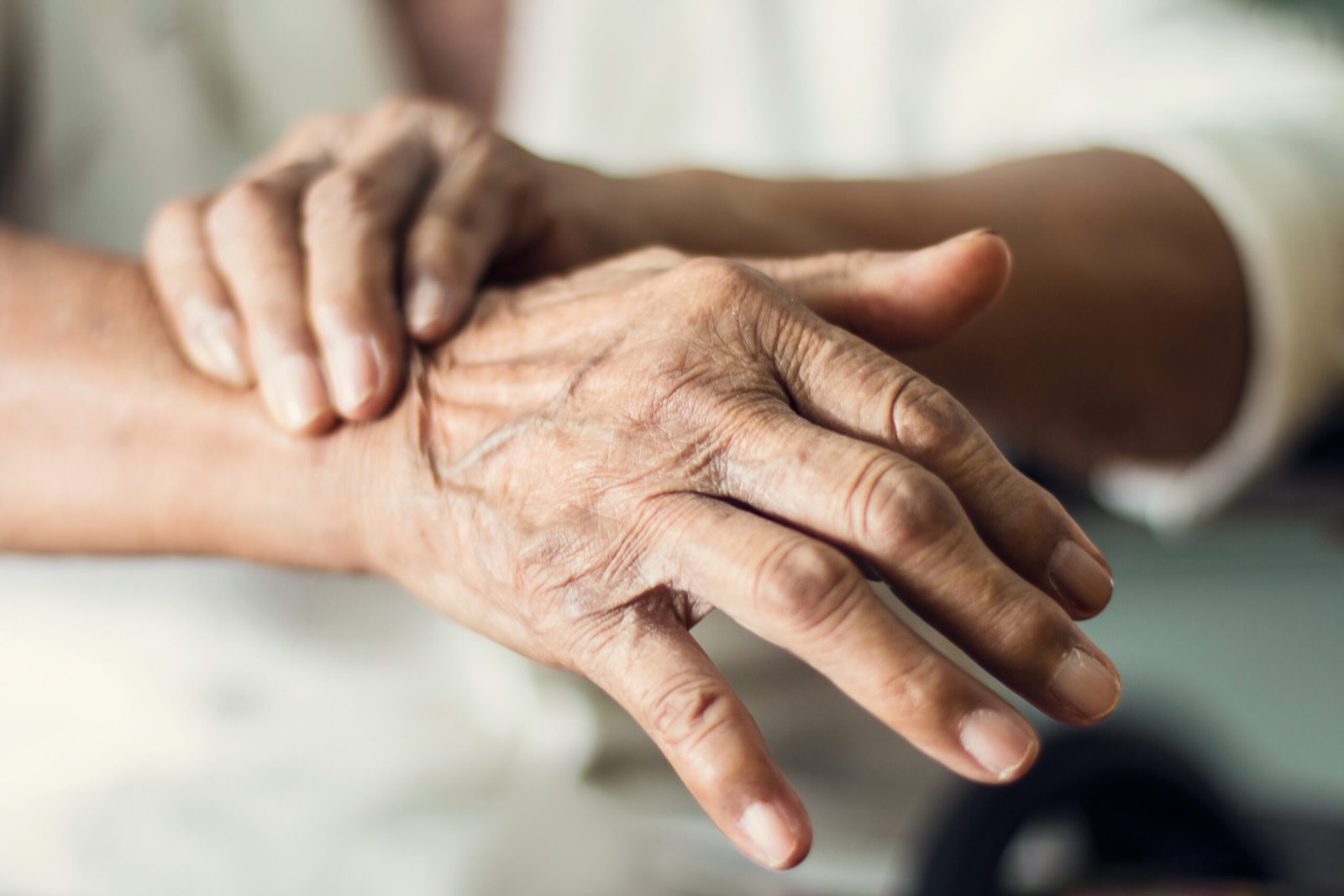
Parkinson’s disease is a progressive neurological disease that arises with the involvement of, in particular, the dopamine-producing nerve cells in the brain, and that can affect the control of movements and, over time, some non-motor functions. Symptoms can differ from person to person, and the course of the disease is not the same in every patient.
What are the main symptoms of Parkinson’s disease?
The most common motor symptoms in Parkinson’s disease are as follows:
- Tremor that may be prominent at rest
- Slowness of movement (bradykinesia)
- Stiffness in the muscles (rigidity)
- Balance and gait problems
- Reduction in facial expressions and walking with small steps
Parkinson’s is not limited to the movement system alone. Non-motor symptoms such as sleep disorders, constipation, reduction in the sense of smell, depression, anxiety, pain, urinary complaints and cognitive changes can also be seen.
How is Parkinson’s disease assessed?
Parkinson’s is diagnosed mainly through neurological examination and the patient’s history. Not every tremor means Parkinson’s. Since essential tremor, medication-related movement disorders and different parkinsonism pictures can cause similar complaints, differential diagnosis is important. When necessary, imaging and other investigations can be used for the purpose of supporting the diagnosis or ruling out different causes.
The stages of Parkinson’s disease
The clinical severity of Parkinson’s disease can be assessed with different scales. In the frequently used Hoehn and Yahr classification, the disease is generally addressed in five stages:
Stage 1
The symptoms are usually on one side of the body and mild. Daily life is most often not markedly affected.
Stage 2
The symptoms can be seen on both sides of the body. Slowing in walking, posture and daily activities can become prominent, but balance is generally preserved.
Stage 3
Balance disturbance and a tendency to fall can occur. Although the patient can maintain most of their daily activities, functionality is more affected.
Stage 4
Mobility restriction is marked and the need for help in daily life increases. The patient can generally stand or walk short distances with support.
Stage 5
This is the advanced period of the disease. Walking can be severely restricted and intensive support in daily life may be needed. This staging does not determine the treatment decision on its own; the patient’s age, symptoms, response to medication and accompanying conditions are assessed together.
Treatment options in Parkinson’s disease
In Parkinson’s disease, treatment is planned on an individual basis for the purpose of reducing the symptoms and supporting the patient’s daily life functions. Different medication groups, primarily levodopa, can be used. The dose and timing of the medications can be readjusted during the course of the disease.
Physical activity, regular exercise, physiotherapy and, when necessary, speech-swallowing therapies are also important parts of the follow-up process.
When does a brain pacemaker come onto the agenda in Parkinson’s disease?
In some patients who benefit from drug therapy but experience marked “on-off” periods during the day, whose involuntary movements increase, or who have tremor that cannot be adequately controlled with medication, advanced treatment options can be considered. Deep brain stimulation (DBS) is one of the methods known colloquially as a brain pacemaker.
A brain pacemaker is not suitable for every Parkinson’s patient. The decision is made by the neurology and neurosurgery teams by addressing together the neurological assessment, response to medication, cognitive status, age, accompanying diseases and surgical suitability.
After brain pacemaker surgery, neurological follow-up and programming of the device are important. During programming, the stimulation settings are adjusted gradually according to the patient’s symptoms, and drug therapy is replanned when necessary.
Detailed information about brain pacemakers and brain pacemaker programming
Frequently asked questions about Parkinson’s
Does every tremor mean Parkinson’s disease?
No. Essential tremor, certain medications, thyroid diseases and different movement disorders can also cause tremor. Parkinson’s is diagnosed not according to the presence of tremor alone, but by assessing together the history and neurological examination findings.
Does Parkinson’s disease recover completely?
At present, there is no treatment that completely eliminates Parkinson’s disease. The aim of treatment is to control motor and non-motor symptoms, support daily life functions, and adjust the treatment on an individual basis throughout the course of the disease.
Does the dose of Parkinson’s medications always stay the same?
No. Since the symptoms of the disease, the response to medication and possible side effects can change over time, doses and the timing of medications during the day can be readjusted during neurological follow-up. Changes to the medications should not be made on one’s own.
Why is exercise important in Parkinson’s disease?
Regular physical activity suitable for the person can help support mobility, balance and muscle strength. The exercise program should be planned according to the person’s age, fall risk, accompanying diseases and functional status.
When is a brain pacemaker considered in Parkinson’s disease?
In selected patients who have marked motor fluctuations, dyskinesias or tremor that cannot be adequately controlled with medication despite benefiting from medications, DBS assessment can come onto the agenda. Suitability requires neurological, cognitive and surgical assessments to be carried out together.
Specialist Dr. Şule Koçyiğit and professional fields of work | İzmir practice and contact information
This content has been prepared for general informational purposes and does not replace personal diagnosis or treatment advice.

