
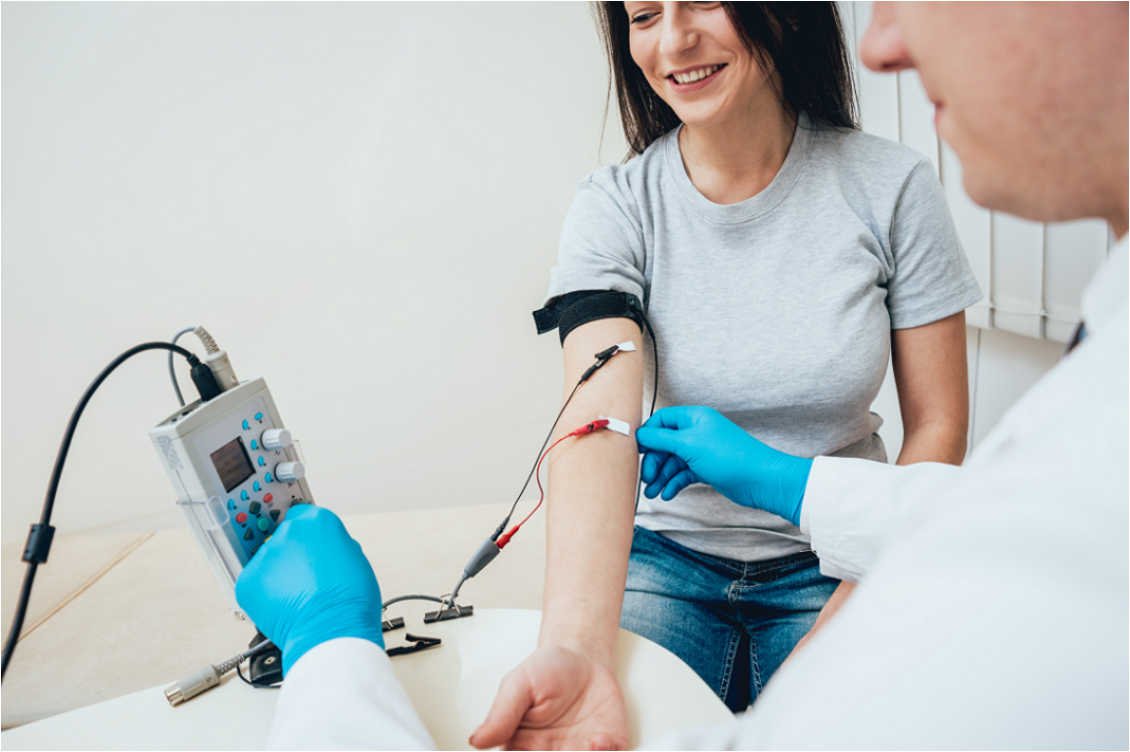
Electromyography (EMG) is a neurophysiological investigation used to assess the function of the peripheral nerves and muscles. It is most often performed together with nerve conduction studies. Rather than definitively determining the cause of a complaint on its own, the test provides important information that supports the clinical examination.
In which situations may an EMG be requested?
EMG and nerve conduction studies can be used in assessing the following complaints and conditions:
- Numbness and tingling in the hands or feet
- Muscle weakness
- Carpal tunnel and other nerve entrapments
- Suspected radiculopathy originating from the lower back or neck
- Polyneuropathy
- Muscle diseases (myopathies)
- Motor neuron diseases
- Neuromuscular junction diseases
How is an EMG done?
The investigation may consist of two basic parts depending on the patient’s complaint. In nerve conduction studies, a low level of electrical stimulation is applied to the nerves via electrodes placed on the skin, and the conduction properties of the nerve are measured. In the needle EMG part, a thin needle electrode is placed into specific muscles and the electrical activity of the muscle at rest and during contraction is assessed.
The same nerves and muscles are not examined in every patient. The scope of the test is determined according to the neurological examination and the preliminary diagnosis.
What does an EMG show?
An EMG can help with whether the nerve damage may be in the peripheral nerve, the nerve root, the muscle tissue or the neuromuscular junction. It can also provide information about the extent and distribution of the damage and, in some cases, its timing.
An EMG result does not always provide a diagnosis on its own. The findings are assessed together with the patient’s history, neurological examination and, when necessary, imaging or laboratory tests.
Preparation before an EMG
- It is preferable not to apply cream or lotion to the skin on the day of the test.
- Comfortable clothing that allows easy access to the arms and legs may be suitable.
- The use of blood thinners, a bleeding disorder, and the presence of a pacemaker or an implanted device should be reported to the physician before the test.
- Information should be given about the medications used and existing illnesses.
Is an EMG painful?
The electrical stimulations in the nerve conduction part may cause a brief feeling of discomfort. During the needle EMG as well, temporary pain or tenderness may be felt due to the thin electrode placed into the muscle. The degree of discomfort varies from person to person.
Information about polyneuropathy | Information about neuropathic pain
This content has been prepared for general informational purposes; it does not replace personal diagnosis or treatment advice.

